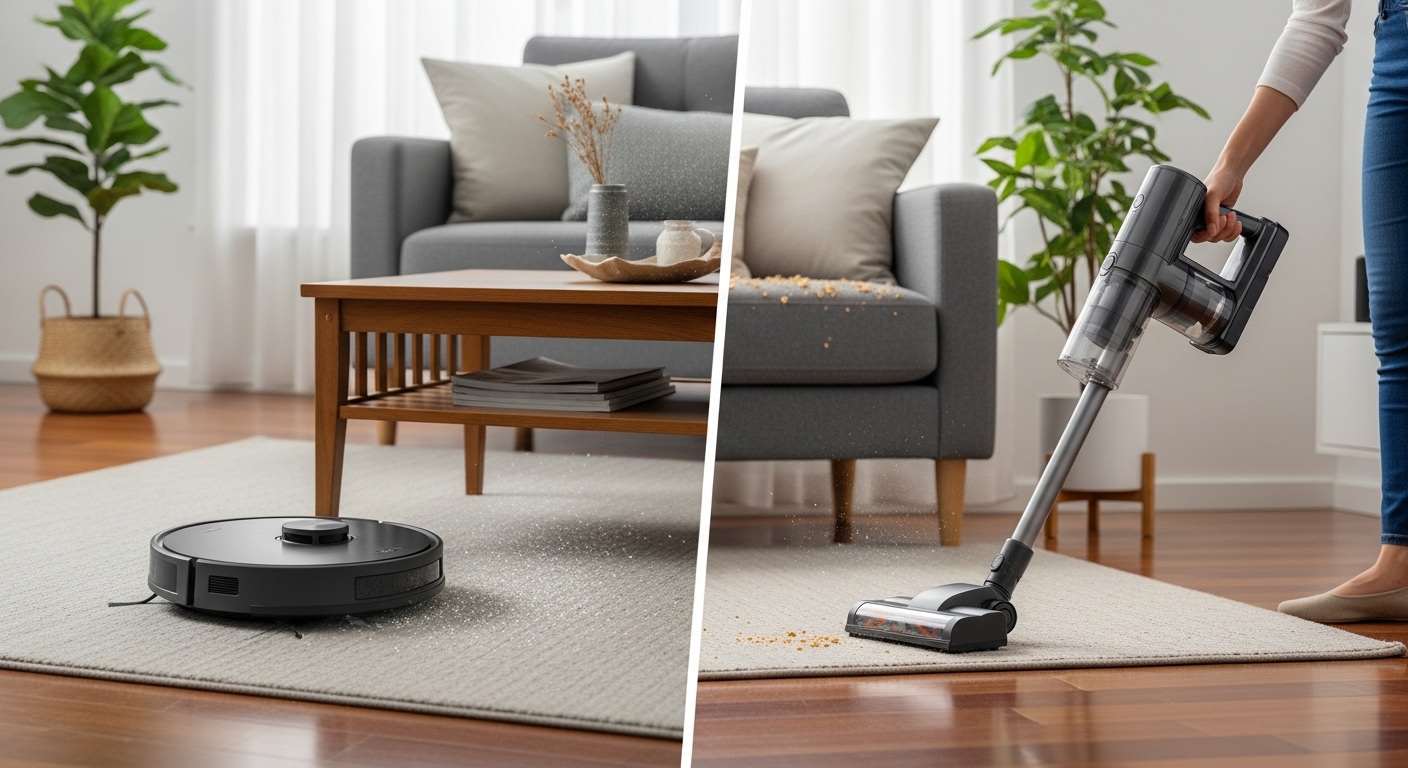
If your living room gets messy every single day—crumbs, dust bunnies, pet hair, footprints—there are two popular ways to stay on top of it: a robot vacuum that runs on autopilot, or a stick vacuum you grab for quick passes.
I’ve lived with both styles long enough to notice the real difference isn’t just “which cleans better.” It’s which one actually fits your routine, your floors, your pets, and how much effort you’re willing to spend day-to-day.
Daily living room reality: what you’re cleaning
Most “daily cleanup” falls into a few buckets:
- Visible crumbs near the coffee table or couch
- Dust + hair along baseboards and under furniture
- High-traffic grit at entryways or rug edges
- Pet fur tumbleweeds that appear out of nowhere
The best tool is the one that makes those problems go away consistently.
Robot vacuum: pros and cons for daily use
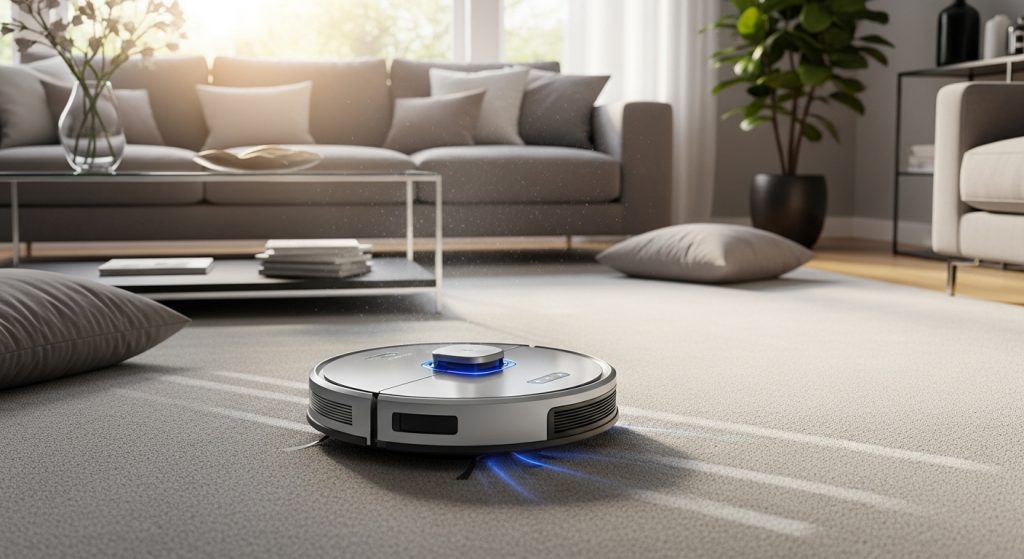
✅ Robot vacuum advantages
1) It cleans when you don’t feel like it
This is the biggest win. Daily runs stop dirt from building up, so the living room stays “company-ready” more often.
2) Great at under-furniture dust
Robots get under sofas, TV stands, and low cabinets where stick vacuums often don’t reach unless you intentionally go there.
3) Best for “maintenance cleaning”
If your goal is to prevent mess from accumulating, a robot is extremely effective. It’s like brushing your teeth—small daily effort prevents bigger problems.
4) Helps a lot with pet hair
Especially when scheduled daily. The magic is frequency, not raw suction.
❌ Robot vacuum drawbacks
1) It doesn’t love clutter
Cords, socks, kids’ toys, and random stuff on the floor can stop it or create a “robot rescue” situation.
2) Corners and edges can be hit-or-miss
Robots usually do okay around edges, but they rarely beat a human doing a focused pass.
3) Rugs can be a mixed bag
On low-pile rugs: usually great.
On thick/high-pile rugs: depends on the robot and can lead to missed debris or getting stuck.
4) Maintenance is real
You’ll be emptying the bin, cleaning brushes, and occasionally detangling hair. It’s not hard—just something people forget to factor in.
Stick vacuum: pros and cons for daily use
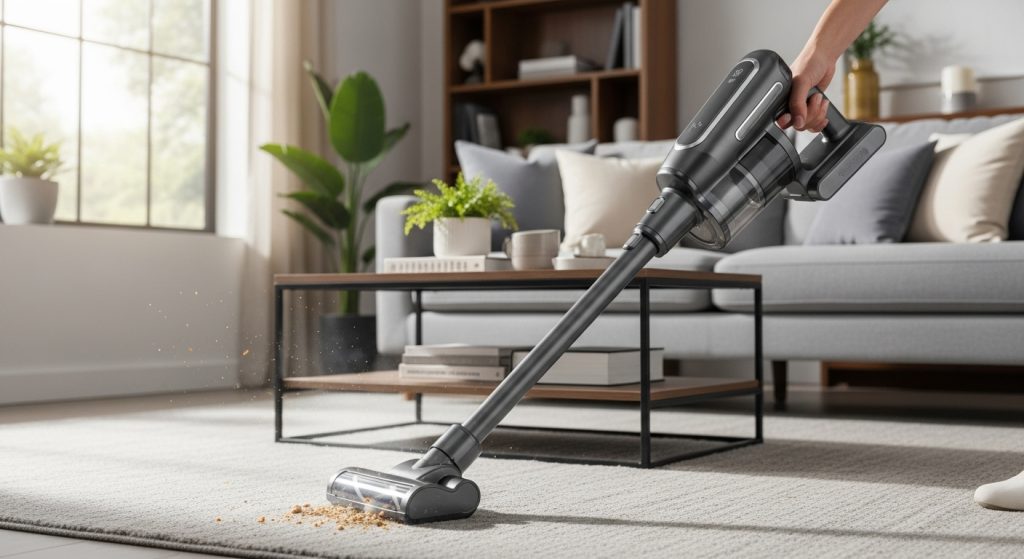
✅ Stick vacuum advantages
1) Instant targeted cleanup
Spilled chips? Quick pass. Sand at the door? Done in 30 seconds. Stick vacuums shine when you want fast control.
2) Better deep pickup per pass
For visible debris, corners, and rug edges, a stick vacuum usually gets a stronger “one-and-done” result.
3) No prep required
No moving cords out of the way for a schedule. No robot getting stuck. You decide where to clean and how aggressively.
4) More versatile
Most stick vacs can do:
- couch cushions
- baseboards and corners
- stairs
- car floors
- curtains / vents (with attachments)
❌ Stick vacuum drawbacks
1) You still have to do it
Even a great stick vacuum doesn’t help if you’re tired. Daily cleaning depends on you remembering and being willing.
2) Under-furniture is easy to skip
Unless you make it a habit, dust under the couch often gets ignored.
3) Battery life can limit longer sessions
For “daily living room cleanup” it’s usually fine, but whole-house cleaning may require planning or recharging (depending on the model).
Side-by-side: which is better for daily living room cleanup?
If you want a living room that stays clean without thinking
✅ Robot vacuum wins.
Daily runs keep the baseline clean. The floor just looks better most days, with less effort.
If your living room gets random messes and you need fast spot-cleaning
✅ Stick vacuum wins.
It’s quicker for “oh no” moments and better for getting edges and corners in a single pass.
If you have pets
- Robot vacuum: best for daily fur management when run often
- Stick vacuum: best for couch/fabric cleanup and clumps around edges
Practical winner for pet homes: Robot for daily + stick for touch-ups (if you can only choose one, pick based on your lifestyle below).
If you have kids / lots of floor clutter
✅ Usually stick vacuum is easier day-to-day.
Robots struggle if toys and cords are always out.
If you have lots of rugs
- Low-pile rugs: robot can do very well
- Thick/high-pile rugs: stick usually performs more reliably
Real-world routines that actually work
Best “low-effort clean living room” routine (robot-first)
- Robot runs once per day (or 4–5x/week)
- You do a 1–2 minute quick pickup (cords, socks, toys)
- Once a week, use a stick vacuum for corners + couch
This keeps the room looking consistently clean with minimal effort.
Best “I hate setups, I want control” routine (stick-first)
- Stick vacuum 3–5 minutes every other day (or daily in high traffic homes)
- Focus on: entry path, coffee table zone, rug edges, couch front
- Quick attachment pass on couch cushions once a week
This gives a fast “looks clean now” effect.
Optimal choice: which should you pick?
For daily living room cleanup, the optimal choice for most people is:
✅ Robot vacuum — if your main goal is consistent cleanliness with minimal effort.
Because daily frequency beats occasional “perfect cleaning.” A robot keeps dust and debris from building up, and that’s what makes a living room feel clean.
✅ Choose stick vacuum instead if:
- your floor is usually cluttered (kids’ toys, cords, lots of stuff)
- you need quick spot cleanups more than scheduled cleaning
- you have thick rugs or lots of tight corners
- you prefer doing a fast focused pass and being done
Quick decision guide (simple)
Pick robot vacuum if you say:
- “I forget to vacuum.”
- “I want it clean without thinking.”
- “Pet hair shows up daily.”
- “Dust under the couch annoys me.”
Pick stick vacuum if you say:
- “My floor is never clear enough for a robot.”
- “I want instant cleanup on demand.”
- “I need corners, edges, and rugs to look perfect fast.”