An electric kettle is one of the fastest, easiest kitchen tools—until it isn’t. Most problems come from a few avoidable habits: overfilling, boiling dry, letting scale build up, or using the wrong water level. The good news is that safe use is simple, and a little maintenance keeps it boiling fast for years.
Here’s a practical, real-life guide to safe boiling, better speed, easy descaling, and a no-nonsense list of do’s and don’ts.
Before you boil: quick safety setup
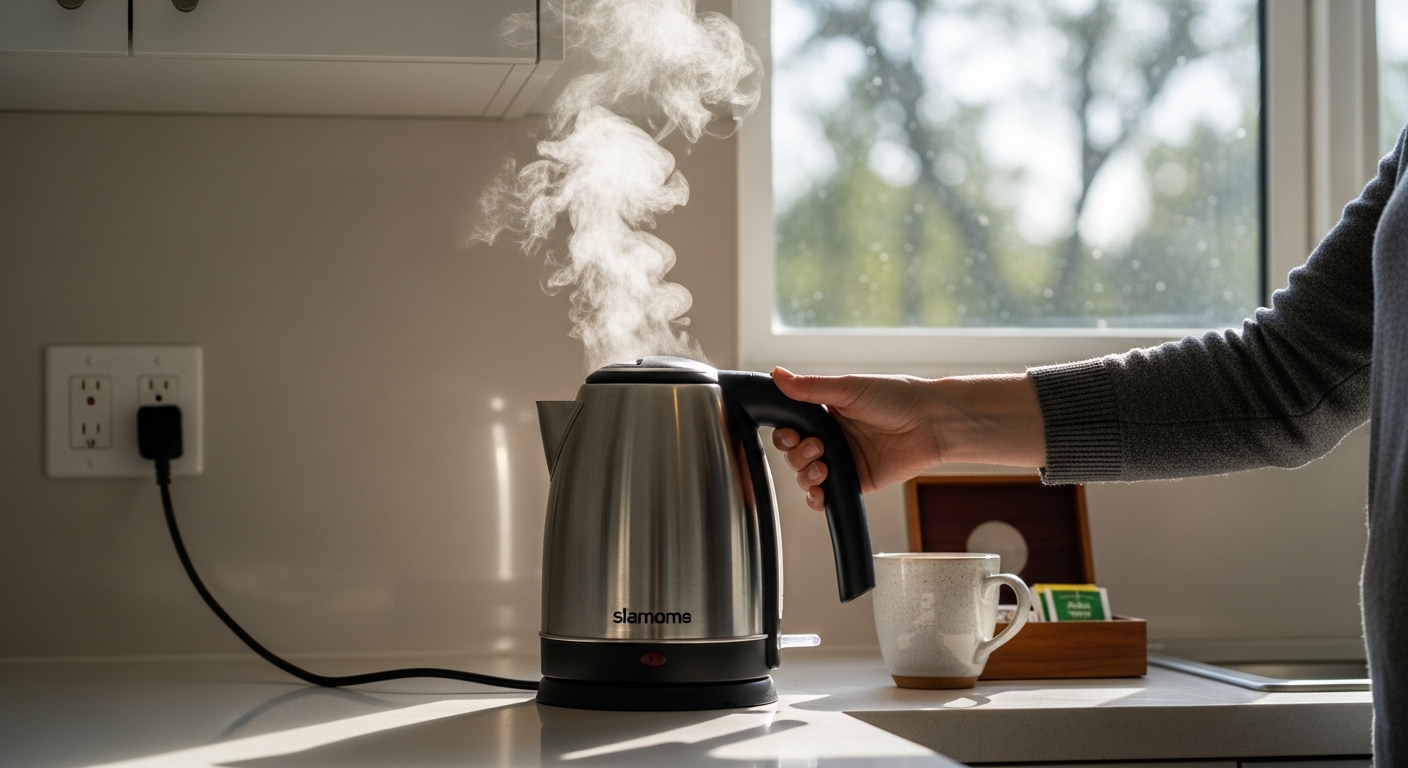
1) Use the right outlet
- Plug directly into a wall outlet if possible.
- If you must use an extension cord, use a heavy-duty one (kettle draws high power).
- Keep the cord away from the sink edge and stove burners.
2) Place it on a stable, dry surface
- Flat counter, away from hanging towels, paper towels, or clutter.
- Keep the base dry—water + electricity is not a mix you want.
3) Check the water level lines
Most kettles have MIN and MAX marks.
- Below MIN: risk of overheating/boiling dry.
- Above MAX: boiling water can spit through the spout or lid area.
How to boil water fast (without doing anything risky)
Boil speed is mostly about how much water you heat and how clean the heating area is.
Tips that actually make a difference
- Heat only what you need.
Boiling 2 cups is much faster than boiling a full kettle “just in case.” - Keep the lid fully closed.
Heat escapes through a cracked lid and slows boiling. - Descale regularly.
Mineral buildup acts like insulation and can noticeably slow boil time. - Start with fresh cold water.
Reboiling old water isn’t dangerous in normal use, but fresh water tastes better for tea/coffee.
Safe boiling steps (the routine I recommend)
- Fill between MIN and MAX.
- Wipe any drips off the outside and base.
- Set the kettle on the base properly (centered and stable).
- Close the lid fully and switch it on.
- Let it shut off automatically.
- Pour slowly, keeping hands away from steam and spout splash.
Steam burn reality check
Steam burns happen fast. Don’t hover over the lid or spout to “check if it’s boiling.” You’ll know.
Descaling 101: keep it fast, clean, and tasting good
If you see white/chalky spots inside, slower boils, or odd taste—time to descale.
How often should you descale?
- Soft water: every 1–2 months
- Hard water: every 2–4 weeks
- If you use it multiple times daily, go more often.
The easy vinegar method (most common)
- Fill kettle with 1:1 water + white vinegar (enough to cover the scale line).
- Bring it close to a boil, then turn off and let it sit 20–30 minutes.
- Empty and rinse thoroughly.
- Boil plain water once or twice, discard, then you’re good.
The lemon/citric acid method (smells nicer)
- Fill with water and add:
- 1–2 tablespoons citric acid, or
- juice of 1–2 lemons (plus water)
- Heat, let sit 15–30 minutes.
- Rinse well, then boil plain water once and discard.
Important descaling note
Never scrub aggressively with abrasive pads inside the kettle—especially on coated interiors. If something is stubborn, repeat the soak instead.
Cleaning: what you should (and shouldn’t) wash
What’s okay
- Rinse interior with water
- Wipe exterior with a damp cloth
- Clean the filter (if removable) according to the manual
What to avoid
- Submerging the kettle (most electric kettles are not designed for that)
- Getting water into the base, switch area, or electrical contacts
- Bleach or harsh chemicals inside the kettle
Simple Do’s and Don’ts (save this section)
✅ DO
- Keep water between MIN and MAX
- Keep the lid closed while boiling
- Unplug when cleaning the outside or moving it long distance
- Descale regularly for faster boils and better taste
- Pour slowly and keep your face/hands away from steam
❌ DON’T
- Don’t boil with no water (boil-dry protection isn’t a license to test it)
- Don’t overfill (hot water can spit out of the spout)
- Don’t open the lid while actively boiling
- Don’t use a lightweight extension cord (overheating risk)
- Don’t let the base sit in puddles near the sink
Common problems and quick fixes
“It’s taking longer to boil than before”
- Almost always scale buildup → descale.
- Also check: lid not sealing, kettle overfilled, or outlet/cord issues.
“It smells weird”
- New kettle smell: boil and discard water 2–3 times.
- Ongoing odor: descale + rinse well, then boil plain water once.
“White flakes in my cup”
- That’s mineral scale breaking off. Safe-ish but unpleasant → descale and consider filtered water.
“The kettle shuts off too soon”
- Sometimes the lid isn’t closed, or scale affects sensors → clean/descale and try again.
Safety for households with kids/pets
- Keep the kettle pushed back from the counter edge.
- Avoid dangling cords.
- Pour away from yourself and anyone nearby.
- Don’t leave hot water sitting in the kettle where someone might grab it.
Final takeaway
To use an electric kettle safely and keep it boiling fast:
- Fill correctly, keep it dry, don’t hover near steam, and descale regularly.
That’s 90% of safe, reliable kettle use.