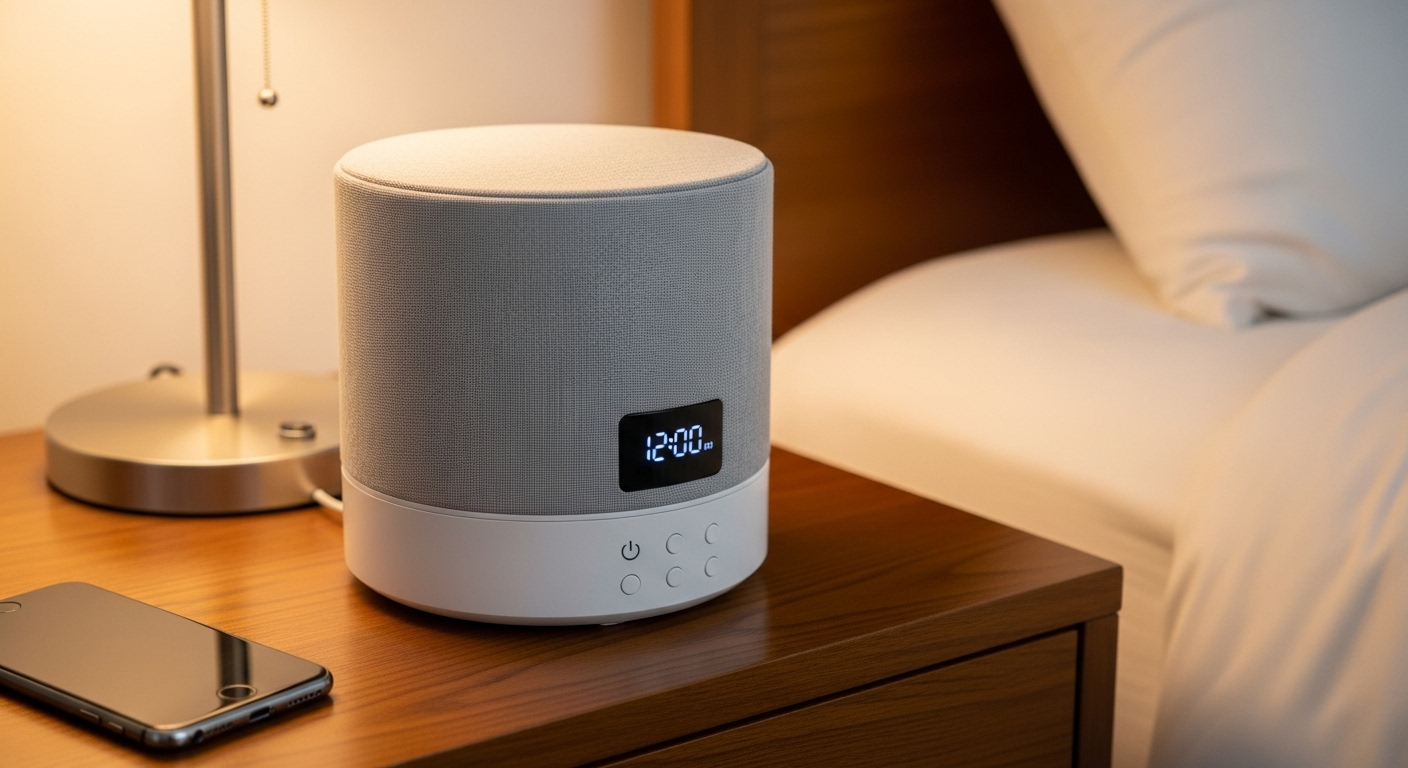
A white noise machine can be a game-changer—if you use it right. Used properly, it doesn’t “knock you out.” It works by masking sudden sounds (doors, neighbors, traffic, barking) so your brain doesn’t react and wake you up. Used poorly (too loud, wrong placement, harsh tone), it can become another sleep disruptor.
Here’s the practical guide to volume, placement, and settings that actually help you sleep.
1) Pick the right sound (not everyone should use “white” noise)
“White noise” is just one type. Many people sleep better with softer options.
Common noise types (simple)
- White noise: bright/hissy, like a TV static vibe
- Pink noise: softer, less sharp; often feels more natural
- Brown noise: deeper, bassier; like a low rumble
- Fan / air / rainfall: “shaped” sounds that feel familiar
Real-world tip:
If white noise feels irritating or makes you more alert, switch to pink, brown, or fan sounds. A lot of people think white noise “doesn’t work,” when they really just chose the wrong tone.
2) Set volume correctly (this is where most people mess up)
The goal is to blend into the background, not dominate the room.
A good starting rule
Set it just loud enough to cover the sounds that wake you up.
Practical volume test
- Stand in your bedroom doorway with the machine on.
- If it sounds “obvious” or attention-grabbing, it’s probably too loud.
- If it fades into the room and you only notice it when you listen for it, you’re close.
Why too loud is a problem
Too loud can:
- make your brain “track” the sound
- cause morning grogginess for some people
- become a new sleep dependency at high volume
Sleep-friendly mindset: consistent, gentle masking.
3) Placement: where to put it for best masking
Placement matters as much as volume.
Best placement for most bedrooms
- Place it between you and the noise source, if possible.
- Example: window traffic → machine near the window side of the room
- hallway noise → machine closer to the door side
Distance from your head (important)
- Don’t put it right next to your pillow.
- A safe, comfortable approach is across the room or at least several feet away.
Height
- Nightstand height is fine.
- If noise comes from outside, placing it near the window wall can mask better.
Goal: the sound fills the room evenly, not blasting your ears.
4) Use the right setting style (steady is best for sleep)
Best for sleep: steady, non-changing sound
Choose a sound that doesn’t loop obviously and doesn’t “rise and fall” in a way your brain can detect.
Avoid for sleep (often):
- tracks with noticeable repeating loops
- “ocean waves” that surge up and down (some people love it, others wake up when it gets quiet)
- random chirps/birds (too attention-grabbing)
Fan mode vs. digital noise
If you’re sensitive to audio texture:
- “fan” or “air” sounds often feel more natural
- digital white noise can feel sharp (pink/brown may help)
5) Timer vs all-night: what’s better?
Most people do best with all-night
A steady sound all night prevents early-morning wakeups when the house gets louder or traffic starts.
When a timer works
- If you only need help falling asleep, not staying asleep
- If your machine is loud and you want it off later (but it’s usually better to lower volume instead)
If you wake up when it shuts off: run it all night at a lower volume.
6) How long until it “works”?
Sometimes it works immediately. For others, it’s a habit effect.
Give it 3–7 nights with:
- the same sound
- same volume
- same placement
Your brain adapts, and it becomes a cue for sleep.
Sleep-friendly setup recommendations (quick presets)
If you’re a light sleeper (random noises wake you)
- Sound: pink or fan
- Volume: low-to-medium (just enough to mask)
- Placement: between you and the noise source
- Run: all night
If you live near traffic or loud neighbors
- Sound: brown (deeper masking)
- Placement: near window or shared wall
- Run: all night
- Add-on: door draft stopper or thick curtains for extra quiet
If you share a room and need something gentle
- Sound: soft fan or pink
- Volume: low
- Placement: not directly aimed at either person
Do / Don’t list (save this)
✅ DO
- Start with pink or fan if white feels harsh
- Place it a few feet away, not at your ear
- Keep volume just enough to mask
- Use a steady sound without obvious loops
- Run it all night if you wake up early
❌ DON’T
- Don’t crank it loud “to force sleep”
- Don’t choose sounds with changing intensity if you wake easily
- Don’t place it right next to your pillow
- Don’t switch sounds every night (your brain can’t settle)
Troubleshooting (common issues)
“It’s annoying / I can’t ignore it”
- Lower volume
- Switch from white → pink/brown/fan
- Move it farther away
“I still hear the noise that wakes me”
- Move machine closer to the noise source (window/door wall)
- Increase volume slightly (small changes, not big jumps)
- Use a deeper tone (brown) for low-frequency outside noise
“I wake up at 4–5 AM”
- Run all night (no timer)
- Keep volume steady
- Make sure the sound doesn’t “loop” with quiet gaps